
Angus Certification Update

Angus Certification Update

An Update on Angus Beef Standards

An update to our original article, published 5 September 2025

In September last year, an upcoming decision by the Australian Meat Industry Language and Standards Committee (AMILSC) was the topic of much discussion on the internet as the standards for Angus beef was on the line. We wrote about these proposed changes and what they could mean for consumers buying beef at the supermarket. In our original article, we discussed the proposed reduction in the minimum Angus breed content required to label and market beef as 'Angus Beef', a label which held a lot of prestige and authority with it. The proposal was that beef could be labelled 'Angus' if it contains 50% Angus genetics — down from 75%. This proposed change was expected to apply to export beef, with domestic standards remaining unchanged. Since then, the industry has made its decision — and the rules have changed. So, what does this mean for the beef we buy in Australia, and how can consumers tell what they're actually getting? 

What Did AMILSC Decide? 
In March 2026, AMILSC finally made a decision: the most significant change is the introduction of new categories that define the composition quality of a beef product. It includes Angus 100 (Pure Angus), Angus 75 (F2) and the new category Angus 50 (F1). Previously, to be labelled as Australian Angus beef, cattle were required to have at least 75% Angus parentage. Under the revised framework, 50% Angus beef (meaning either mum cow or dad cow will be Angus and the other will be a different breed) can now hold the prestigious marketing label of 'Angus Beef'. The new framework brings Australia's breed-content requirements into closer alignment with those used in major export markets, including the United States. This new 50% 'Angus' beef has been hitting shelves since July 1st 2026.


In September 2025, we reported that domestic Angus standards were expected to remain at 75%, but that has changed.

Here's the good (ish) news: beef from the Angus 50 category must use an appropriate description in its sourcing and production, such as Angus 50, Angus F1 or Angus Composite. The unqualified description Angus remains available for qualifying products with at least 75% Angus parentage, and all Angus including Angus 50 programs require approval by AUS-MEAT. 

Now for the bad (ish) news. 

How do we know what percentage of Angus a product contains? 
You might commonly see Angus Beef as a marketing or packaging term on steaks, rissoles, sausages, and pies, but when you pick it up, you can't see the composition label. This is where things get a little more complicated for you.

There are multiple reasons you may not see their percentage denomination: 
Any beef that's 75% or more Angus genetics is able to use the unqualified Angus description. So if you see Angus beef without a denomination, it will be because it's mostly Angus beef. 

Another reason is because the product is a combination product such as a rissole or a sausage. Because this kind of product is under a different governing body, it is not required to have this distinct labelling. While the beef sourced for the product requires clear labelling for the manufacturer, that transparency doesn't necessarily travel to the consumer. 

Does a higher Angus percentage mean better-quality beef? 
While we do believe that transparency and intentionality with product is ideal, just the genetic classification of beef does not define its quality. Angus beef has a reputation for desirable eating qualities, including tenderness, flavour and marbling. However, breed ancestry is only one factor that can influence the final product. Other factors include handling, raising, processing, and even cooking method. 

Marbling and other measures of eating quality can vary between individual animals, even within the same breed. A product with 90% Angus parentage is not automatically more tender or flavourful than one with 75% Angus parentage. Similarly, a higher breed percentage does not, by itself, establish that a product has better animal welfare or environmental credentials. It's important to distinguish between what a label tells us and what we might assume it means. Breed-content standards help establish whether a product qualifies for a particular description. They are not a complete measure of the quality of the meat. 

For us at Sunshine Coast Organic Meats, knowing where our food comes from remains an important part of making an informed choice. Our Angus beef is supplied by Elliott Agriculture, a family-run farm in the Darling Downs. The farm has advised us that its cattle are conservatively more than 90% Angus, with some older breeding animals having ancestry from other British breeds, including Hereford. As we explained in our original article, this information comes from our supplier. It is important to distinguish that supplier-provided information from a separately verified or audited breed-content claim. Our focus is on supplying organic and free-range meat, with an emphasis on transparency, animal welfare and environmental protection. Organic certification, production methods, breed content and eating quality are separate considerations and the whole picture is required to make a truly informed decision.

When choosing meat, we encourage consumers to ask questions about its origin, production methods and the claims being made about it.

What should you look for when buying Angus beef?
The revised standards are a useful reminder that food labels deserve a closer look. Here are a few practical things to consider:
Check the exact wording
Look for a qualified breed description where one is provided, rather than assuming every product labelled Angus has the same breed content. 

Ask questions.
If the breed percentage matters to you, ask the retailer or producer what category applies and how the claim is substantiated.

Consider the whole product.
Breed content alone cannot tell you everything about tenderness, flavour, animal welfare, organic status or environmental impact. 

Know your supplier.
Buying from a business that can explain where its meat comes from gives you another way to make an informed decision. 
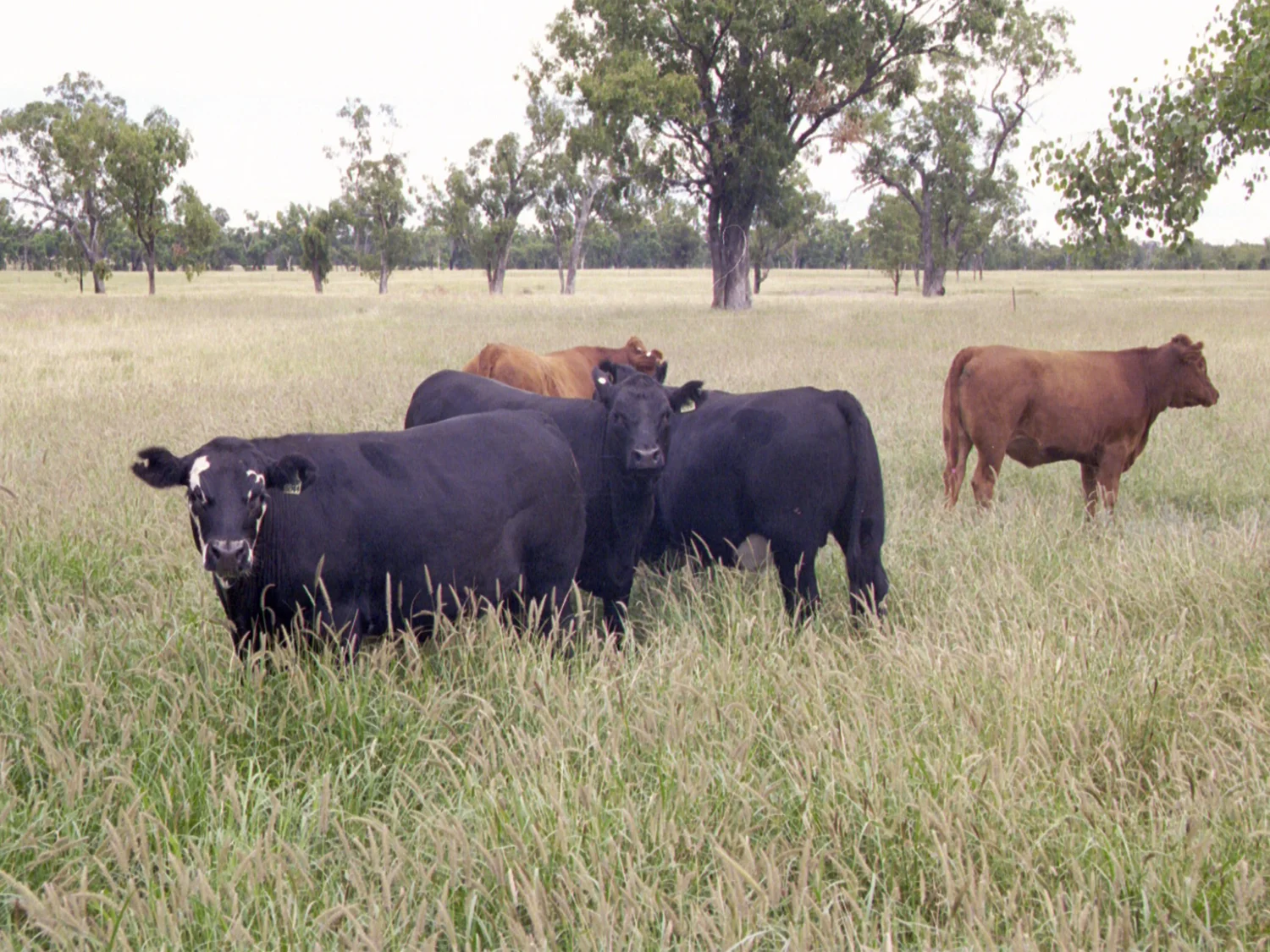

picture from Elliott Agriculture

Since our original article was published in September 2025, Australia's Angus breed-content framework has changed. The biggest lesson for consumers isn't simply that the numbers have changed. It's that a marketing claim is only useful when we understand what it measures — and what it doesn't. The percentage of beef in a packet is not the same as its Angus breed content, and breed content alone doesn't guarantee eating quality. At Sunshine Coast Organic Meats, we believe knowing where your food comes from matters. We encourage you to ask questions, understand the labels and choose the meat that best aligns with your priorities.